top of page

News & Insights

Filter items with label

Search by term

Man in a hard hat consults tablet while standing in front of a transmission line. By Marla Orenstein and Ashley Meller Originally published in Canada's National Observer , Jan. 27, 2026

Op-Ed: Canada’s leverage in a fractured world starts with energy

Man in a hard hat consults tablet while standing in front of a transmission line. By Marla Orenstein and Ashley Meller Originally published in Canada's National Observer , Jan. 27, 2026

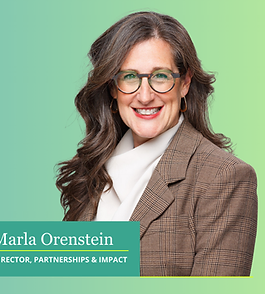
The Energy Futures Lab  (EFL) is pleased to announce the addition of Marla Orenstein  to our leadership team as Director, Partnerships & Impact .  In this role, Orenstein will lead the Lab’s partnership strategy and grow public awareness and understanding of how the Lab’s multiple streams of insight and analysis  generate real-world impact on Canada’s energy system—by catalyzing sustainability-aligned energy innovation, fostering collaboration across many fields of expertise and diverse perspectives, supporting emission-reducing technology investment and diffusion, and accelerating value chain formation in high-potential emerging industry ecosystems to help capture greater value for Canada’s resources.  Since first becoming involved with the Lab as a member of its signature fellowship program , Orenstein has become widely recognized as a trusted voice in national and international conversations on Canada’s energy future, with a deep understanding Western Canada’s distinct priorities, assets, and opportunities. “Meeting the challenges that Canada’s energy sector faces at this moment is only possible through relentless focus, unwavering resolve, and extraordinary trust between system leaders" -Marla Orenstein As global markets reel from unprecedented disruption to global order and trade, Canada has a small but critical window of opportunity to set the stage for the next wave of economic growth—one that builds on existing strengths in energy, petrochemicals, technology, and industrial expertise—if it can coordinate the necessary players and capabilities required to seize it. The Energy Futures Lab exists to help navigate this moment by convening leaders across sectors, regions, and perspectives to align strategy, investment, policy, and innovation. Orenstein’s appointment reflects the Lab’s growing focus on partnerships as a critical component for turning opportunities into reality. “Meeting the challenges that Canada’s energy sector faces at this moment is only possible through relentless focus, unwavering resolve, and extraordinary trust between system leaders," said Marla Orenstein, Director, Partnerships & Impact, Energy Futures Lab. “The Energy Futures Lab has built a rare space in Canada where leaders with different, and sometimes opposing, goals can tackle tough  challenges together and quickly find  innovative solutions that drive real action. I’ve seen the Lab shift conversations, unite unlikely allies, and turn halting progress into unstoppable momentum. I’m excited to join this team at such a pivotal moment for Alberta’s future.” Orenstein brings extensive experience working at the intersection of research, analysis, partnerships, and public dialogue—connecting governments, industry leaders, Indigenous partners, investors, and civil society. Her work has helped inform policy debates and investment decisions across Canada and internationally, with a reputation for credible analysis and thoughtful, solutions-oriented leadership. “Marla is a perfect fit for where the Energy Futures Lab is headed,” said Alison Cretney, Executive Director of the Energy Futures Lab. “She brings deep credibility in Canadian energy and natural resource discussions and a proven ability to build trusted partnerships across sectors. As Canada works to compete higher up the value chain and align infrastructure, policy, and investment around emerging low-emission opportunities, Marla’s experience and leadership will be instrumental to amplifying both the impact and awareness of the Lab’s important work.” The addition of Orenstein comes as the Energy Futures Lab deepens its focus on moving from analysis to enabling action—supporting collaboration across electricity system modernization, critical minerals and advanced materials, sustainable finance, economic competitiveness and reconciliation, and regional resilience, among others. Across all of this work, the Lab believes collaboration remains Alberta’s greatest competitive advantage. “Other jurisdictions are moving quickly,” added Cretney. “Alberta’s success will depend on how well we align people, capital, and policy. Marla’s deep connections in Western Canada and ability to quickly analyze and adapt to the shifting landscape will play a key role in helping us build the partnerships needed to seize this moment.” Along with the recent engagement of Tom McCaffery  on the organization's government relations file, this most recent appointment positions the Energy Futures Lab for even greater impact in 2026 and beyond.

Energy Futures Lab Welcomes Marla Orenstein as Director, Partnerships & Impact

The Lab welcomes Marla Orenstein as Director, Partnerships & Impact. Marla will lead efforts to turn insight into further action, connecting leaders across sectors to drive sustainable energy innovation, lower emissions, and stronger collaboration across the system to build the economic engines of the future—helping Alberta and Canada shape a more resilient and prosperous energy future.

By Keren Perla and Ailsa Popilian Originally published in The Hub , December 13, 2025

Op-Ed: From resource powerhouse to industrial superpower: Alberta’s potential in the global trade order

By Keren Perla and Ailsa Popilian Originally published in The Hub , December 13, 2025

By Alison Cretney Originally published in The Calgary Herald , December 6, 2025

Op-Ed: Beyond pipelines, Alberta is ready to help make Canada a superpower

Think pipelines are the central feature of Alberta and Ottawa's MOU? Think again. There’s a deeper shift underway — one that could reshape Canada’s role in the global energy economy.

Photo: Maddie Faunt On November 4, 2025, the very same day that the Lab’s first workshop closed a decade earlier, over 150 members of the EFL’s extended network, including founding members of the Lab platform, joined us in Calgary at Bonterra Trattoria for a very special gathering to celebrate the Lab’s 10th Anniversary . Guests attend the 10th anniversary celebration of the Energy Futures Lab | Photo: Maddie Faunt Between rounds of delicious food, drinks, and enthusiastic reunions of community members, the evening’s program kicked off with a very special opening by Hal Eagletail, who performed a song to bless and safeguard the people leading the important work of energy innovation. Alison Cretney speaks to guests of 10 Forward: A Celebration of 10 Years of Impact | Photo: Maddie Faunt The Lab’s Managing Director, Alison Cretney , offered remarks highlighting the many ways in which the Energy Futures Lab community has helped break through polarization, open new pathways in Alberta’s energy transition, and build the momentum, partnerships, and leadership needed to shape a prosperous, sustainable energy future. And we also debuted two new videos , highlighting the Lab’s journey from inception  to  impact : Next, toasts offered by six supporters of the Lab showcased unique aspects of the Lab’s approach, its community and what it has achieved in its first decade. Arlene Strom | Photo: Maddie Faunt Arlene Strom A founding partner of the Energy Futures Lab, Former Suncor Chief Sustainability Officer and General Counsel and now Chancellor of Mount Royal University toasted the Lab’s  ambition , and  its unique willingness to truly relinquish control in a co-creative space , and the empowerment and sense of duty that trust unlocks in participants . She   reflected on the discussions with Suncor leadership in deciding whether or not to fund the Lab’s initial 3-year arc given the ineffable nature of what it might generate, and how their trust in the founders’ vision ultimately persuaded them to proceed. Steve McDonald | Photo: Maddie Faunt Steve McDonald The Current Generate Canada board member, long-time Lab Advisor, Former CEO of Emissions Reduction Alberta and now Principal at +SM Advisory Services toasted the Lab’s unwaivering commitment to finding solutions amidst deep complexity , and solving problems with integrity, ingenuity and a truly representative diversity of perspectives. Photo: Maddie Faunt Prageet Nibber The CEO and founder of ReWatt Power Inc. toasted the Lab’s capacity as a forum for   mentorship  and a springboard for new ideas , reflecting on an initiative she developed with support from Lab members, Community Power Aggregation, that’s since gone on to be implemented in the UK. Dani Hansen | Photo: Maddie Faunt Dani Hansen Current EFL Fellow and BMO Capital Markets VP Environmental Commodities Sales & Structuring, Dani toasted the Lab’s ability to take complex, systemic issues, and create space for practical collaboration that leads to meaningful impact , pointing to its role in the creation of the investment tax credit now in place to support carbon capture and storage projects in Canada. JP Gladu | Photo: Maddie Faunt JP Gladu The Energy Futures Policy Collaborative Indigenous Advisory Committee Chair and Principal of Mokwateh toasted the Lab’s emphasis on  building relational capital, forged through valuable shared experiences . Chad Park | Photo: Maddie Faunt Chad Park Last but not least, the founding Managing Director of the Energy Futures Lab and current Vice President, Sustainability & Citizenship for The Co-operators, toasted the Lab’s longevity , which he credits to its adaptability , which allows it to  sense the system and quickly pivot to respond to what’s needed most at any given moment. He also praised the application of adaptability in learning and not being deterred by the inevitable missteps that accompany innovation and human relationships. Photos: Maddie Faunt We're grateful to everyone who was able to join us for the event, and to those who sent messages and texts congratulating us on this significant milestone. Your support means the world to us! As we reflect on our journey, we couldn't be prouder of what the Lab community has collectively achieved. Each contribution, big or small, has played a vital role in our success. We value every individual who has been a part of this journey, and we recognize that our accomplishments are a direct result of your hard work and dedication. We extend our most heartfelt thanks to each and every one of you for your unwavering commitment to the Lab's vision  and the hard work and passion you bring to the table every day in service of making that vision a reality. Onwards!

Celebrating 10 Years

Photo: Maddie Faunt On November 4, 2025, the very same day that the Lab’s first workshop closed a decade earlier, over 150 members of the EFL’s extended network, including founding members of the Lab platform, joined us in Calgary at Bonterra Trattoria for a very special gathering to celebrate the Lab’s 10th Anniversary . Guests attend the 10th anniversary celebration of the Energy Futures Lab | Photo: Maddie Faunt Between rounds of delicious food, drinks, and enthusiastic reunions of...

As the Energy Futures Lab turns 10, we’re also celebrating the start of a new era. Today, the Lab is excited to share news of an important milestone for our organization — one that reflects our growth and the strong foundation we’ve built over the past decade. To look ahead, we must first reflect on where we began. In 2015, an idea for a social innovation approach to addressing a growing sense of polarization around energy and climate was born within The Natural Step Canada (TNS). That idea went on to become the Energy Futures Lab, which emerged as the first 'solution space' within TNS, which, in 2024, became Generate Canada : an organization helping to tackle complex challenges at the intersection of the environment, economy and society. Over the past decade, the Lab has grown and matured into Canada’s leading social innovation platform  for the energy transition, bringing together innovators, industry leaders, policymakers, and communities to navigate the challenges and opportunities of some of the most pressing energy issues of our time.  Now, as we mark 10 years of helping accelerate the energy transition in Canada, we are confidently stepping into our next phase of growth. Effective January 1, 2026 , the Energy Futures Lab will become its own independent organization  – a natural progression in our journey from an initiative of Generate Canada to a fully established entity in our own right. This marks an important step forward, and we will continue to collaborate closely with Generate Canada and its solutions spaces , maintaining a strong and strategic partnership where our work intersects. With this transition: The Lab will establish its own Board of Directors, composed of nationally connected regional leaders leaders committed to advancing our shared vision . Our programs, partnerships, and day-to-day work will continue without interruption. For most outside the organization, there will be no discernable change to our operations or programming beyond this shift in financial and governance structures. With our roots in Alberta, we will continue to align our work with regional priorities and realities — applying local expertise and scaling tailored approaches to national and global challenges. As the Lab’s scope has gradually broadened, our platform and methods have become part of the fabric of Alberta’s energy system, with many communities, agencies and organizations eager to partner with us, growing our capacity to host major initiatives independently. Becoming an independent organization will further allow us to deliver programming with the support of regional leadership and broaden our network to connect with strategically aligned organizations and new partners at a critical moment for Canada’s energy future, enabling us to make sustained impact as the energy landscape continues to shift. This evolution is a testament to the strength of the network we’ve built together  — the Fellows, Ambassadors ,  alumni, initiative coalition and working group members, advisors, funders, and friends who have shaped our journey. Your insight, collaboration, and commitment continue to inspire us.  We are profoundly grateful for the enduring partnership and support of Generate Canada, whose stewardship has been essential to our growth. As we look to the next decade, we remain dedicated to accelerating an inclusive and equitable shift to a prosperous and sustainable energy future  — and we look forward to continuing this work with all of you  in this exciting new chapter. #2025 #EFL_Platform #Generate_Canada

A New Chapter Begins for the Energy Futures Lab

As the Energy Futures Lab turns 10, we’re also celebrating the start of a new era. Today, the Lab is excited to share news of an important milestone for our organization — one that reflects our growth and the strong foundation we’ve built over the past decade. To look ahead, we must first reflect on where we began. In 2015, an idea for a social innovation approach to addressing a growing sense of polarization around energy and climate was born within The Natural Step Canada (TNS). That idea...

With additional reporting from  Jennifer Young EFL Fellows on an invigorating, early-morning hike to Grassi Lakes near Canmore Energy Futures Lab Fellows recently gathered for the second time in-person in Canmore at the mid-point of the Fellowship. Together, we worked to unpack insights gathered over the last year and put them into action. Over the summer, work had been done to whittle down the Fellowship’s portfolio of tension investigations i nto four key tensions present across the energy industry:  Investor Coherence and Confidence Relationships with Indigenous Communities  Energy Development in Rural Spaces  Pore Space Many of the Fellows, particularly new ones, were itching to get to work, and after several months of working to understand these tensions, it was time to shift from working in the “problem space” to the “solution space.” GROUNDING TO OPEN Our second gathering was opened with a truly grounding land acknowledgement. Elder-in-training Gilbert Crowchild graciously and humorously shared his traditional knowledge of how the land, the water and the air have sustained for eternity, a sentiment that is echoed in the human experience of motherhood and nurturing. These ideas were cemented with a ceremonial smudge allowing us to be truly open and present for work we had in front of us. ICEBERGS, REVISITED The workshop’s first session focused on completing the ‘Iceberg’ (causal layered) analyses that Fellows had started to work on during the March workshop. These were used to generate a better, more nuanced understanding of the structures and mental models that underpin each of the tensions. In other words, diving even deeper into the problem. In this session, Fellows utilized the data from 101 interviews conducted with people working within these tensions in their day-to-day roles to further explore the assumptions, beliefs and value systems that drive the tensions that we see in the energy system. We observed that many of the tensions are rooted in systems that are much larger than anything our group of fifty people could tackle. For example, in the Rural Energy Development tension, sticky notes added under structures and mental models included things like NIMBYism, rural values, inertia, colonialism, even ‘the way government is structured’. Not only did we spend most of the day in the “problem space” – at this point, it seemed the problems were much deeper and larger than we had initially thought. SHIFTS AND NUDGES Next, we sought to identify shifts in mindset, behaviour, structures or narratives that would need to occur in order to make meaningful progress on each of the tensions by December 2026. As part of this, we were asked to identify some enabling conditions – WWHTBT or “what would have to be true” for the shift to take place. We found ourselves wondering, “what if the thing that would need to be true, did not seem possible or feasible?” – like having regulatory certainty or people having the ability to discern misinformation. After some debate (and a bit of mental spiraling) one Fellow reminded us to be optimistic, and not limit ourselves to what we perceive as possible right now. We may not be able to shift the entire system, but maybe we could nudge it. The FSSD'S SOCIAL PRINCIPLES Sarah Brooks closed the day out with a pointed and impactful overview of the Framework for Strategic Sustainable Development ’s (FSSD) social principles that made many think deeply about what social sustainability really means in practice. She reminded us that social systems are living, adaptive networks, made up of people connected through relationships, interactions, and shared experiences. These systems are constantly evolving, finding new ways to organize and maintain balance even amid uncertainty and change.   Together, we reflected on how this adaptability depends on nurturing five essential conditions: health , ensuring people have access to safety and basic needs; influence , creating space for all voices to shape decisions; competence , supporting learning and skill development; impartiality , upholding fairness and justice; and meaning-making , helping individuals and communities find shared purpose.   The discussion reminded us that sustainability isn’t just about managing resources, it’s also about strengthening the social fabric that allows people and systems to thrive and adapt over time. This exploration of the FSSD social principles set the stage beautifully for the next part of the off-site, where we turned our focus toward systems mapping and the collective capacities needed to navigate complex change. WINDOWS OF OPPORTUNITY Day 2 started off with imagining our energy future via arts and crafts. We were challenged to visualize what the future might look like if the shifts we identified the previous afternoon came to pass and then build a Lego model or draw it. What can we do? And how? What are the initiatives already taking place that Fellows may leverage to bring these shifts about? The use of creativity was a great way to usher the Fellows into the long awaited “solution space”. And boy, did we get creative: there were some great stories, and even an AI generated, Titanic-esque image of certain, nameless politicians that stayed in the mind for a few days! Windmill models and model windmills INTERVENTIONS & CHAMPIONS And now, given everything we’d learned about the issue spaces – the events, observed patterns, the mental models, existing systems and structures, windows of opportunity, what should  we do to close the gap between today and the future? In complex systems, strategy rarely unfolds in linear plans. We talked about “opening moves” as the first, intentional steps that allow learning and adaptation to guide what comes next in a journey of learning, discovery, and potential influence in these tension spaces. Fellows were then challenged to identify the moves they believed were feasible, flexible and visible enough to build momentum and make progress towards shifting narratives and behaviours and resolving the tensions in the energy system. After an afternoon of brainstorming, reflection and dot-mocracy, Fellows were invited to identify initiatives they were interested in championing and/or supporting. And just like that - our 2025 portfolio of initiatives was born! We identified an initial portfolio of fourteen interventions in response to each of the four system tensions, many working across multiple tensions. Dot-mocracy in action Initiatives (or interventions) launched with committed initiative teams, an initial definition of the solution, draft problem statements and ideas for initial steps to be taken in the coming weeks. Utilizing a variety of approaches and tactics, collectively the portfolio works across 4 key leverage points for shifting the system and utilizes 5 basic mechanisms. 4 Leverage Points for System Change Empowering people and communities Strengthening actors and networks Reforming structures and processes And shifting culture and mindsets The four leverage areas loosely mirror Donella Meadows’ leverage points , spanning from feedback loops and information flows to the deeper rules and paradigms that shape systems. 5 Tension-Allieviating Mechanisms 1. Capacity Building & Education Mechanism:  Strengthening skills, literacy, or competence to enable better participation, decision-making, and collaboration. Change logic:  Equip actors with knowledge, tools, and relationships → reduce friction and perceived risk → unlock collaboration and investment. 2. Institution Building & Governance Mechanisms Mechanism:  Creating or strengthening enduring structures, associations, or frameworks that shape how actors interact or make decisions. Change logic:  Institutionalize collaboration, reduce fragmentation, create neutral third spaces to co-learn, and explore and standardize approaches → improve efficiency, transparency, collaboration and legitimacy. 3. Narrative Change & Public Communication Mechanism:  Shifting shared stories, frames, and public meaning to influence norms, legitimacy, and motivation. Change logic:  Reframe mindsets and narratives → shift the perceived “centre of gravity” in decision-making → enable more inclusive and future-fit policies and investments. 4. Financial & Policy Innovation Mechanism:  Creating incentives, instruments, or policies that directly influence capital flows or investor confidence. Change logic:  Align market and policy signals with social and environmental values → increase capital flow toward credible, inclusive projects. 5. Convening & Multi-Stakeholder Collaboration 
 Mechanism:  Bringing diverse actors together to co-create understanding, identify shared goals, and prototype joint actions. 
 Change logic:  Enable trust and mutual understanding → coordinate experimentation and policy → accelerate system learning and legitimacy. System Leverage Focus Capacity Building & Education Institution Building & Governance Narrative Change & Communication Financial & Policy Innovation Convening & Collaboration Empowering People & Communities - Indigenous Invest! 
 - Guiding Questions for Communities & Developers 
 - First Nations Advisory Fund - Major Projects Narrative Reloaded - Indigenous Partnership Incentives - Creating Opportunities for Indigenous Knowledge Keepers StrengtheningActors & Networks - Upskilling Developers in Investor Language 
 - Rural Energy Development Community of Practice - Association of Pore Space Operators - Investment Community Engagement Barriers and Gaps in Alberta - Rural Energy Development Community of Practice 
 - Investment Community Engagement Reforming Structures & Processes - Pre-Approved Rural Project Location Pilot  - Canadian Carbon Border Adjustment Mechanism Equivalent  - Testing Ideas for a National Industrial Strategy - Independent Free Prior and Informed Consent & Sustainability Assessment - Pre-Approved Rural Project Location Pilot Shifting Culture & Mindsets - Indigenous Invest! - Major Projects Narrative Reloaded  - Indigenous Knowledge Keepers in Pore Space Leadership - Indigenous Knowledge Keepers Dialogue It was great to see people raise their hands to lead so many initiatives, and to take initial steps towards action. And while it was uncomfortable to sit with the “problems” for so long, the interventions we identified seem a lot more promising than anything we might have suggested following the first workshop in the spring. Much credit to the EFL team for helping us navigate the journey thus far, and to the Fellows for their openness and willingness to explore. FELLOWS IN THE WILD We were fortunate to have a few days of incredible weather while in Canmore, and many fellows took the opportunity to go for a hike.  Any hike is a great metaphor for the Fellowship – a reminder not only to trust the process, but to enjoy the journey as well as the destination.

Fellows in the Wild: 2025 Fall Fellowship Workshop Recap

Lab Fellows gathered in September for the 2025 Fall Fellowship Workshop to continue to unpack investigations into cross-cutting tensions dampening energy transition efforts and put insights gleaned into action. Fellows Demetria Zinyemba and Jennifer Young recap the workshop's highlights and provide a summary of the processes that led to the creation of the Fellowship's 2025-26 portfolio of initiatives.

SERIES: PART 3 of 3 When a range of opportunities is on the table, spreading bets can lead to big wins — but success relies on the strategies used. Alberta can hedge across a number of emerging energy and resource sectors, yet the real challenge is where to place those bets to maximize future success. In the   first   and   second   parts of this series we introduced 16 low-emission opportunities and scratched the surface on ways to evaluate them, focusing on the potential size of their market share and whether they’re primarily domestic or export-oriented. But there’s more than one way to slice the pie and applying the right set of lenses can sharpen focus on the ones that make the most strategic sense. The opportunity landscape   Alberta has traditionally been an export economy and is very likely to stay that way. But today’s geopolitical and industrial context demands a more nuanced approach than in the past. Trade volatility, shifts in U.S. policy, and changing investment trends require opportunities to be assessed not just by size, but by how well they jive with regional strengths and advantages. When matched successfully, these opportunities can also help solve for some of Canada’s broader challenges: navigating trade uncertainty, addressing infrastructure constraints, and building resilience to policy shifts.   That’s where lenses come into play — a way to gauge what can work well, and where. In this study, we introduce a set of lenses designed to evaluate sectoral opportunities. When looked at together, the lenses provide a wide-angle view and a useful tool for comparative assessment showing where Alberta’s strengths can be leveraged, and offering relevant insights that might otherwise be overlooked.  Lenses provide a wide-angle view and a useful tool for comparative assessment, offering relevant insights that might otherwise be overlooked And when applied individually, each lens provides a more granular way to evaluate an opportunity — soon to be further demonstrated when the full report is released. Like real lenses, they can be used to zoom out to reveal the bigger picture or zoomed in to bring specific opportunities into focus. These lenses provide a way to explore potential opportunities from multiple angles, capturing nuance, and supporting more informed decisions even amid uncertainty. And similar to how not all opportunities will work in all places, not all stakeholders will be shared on which ones to pursue.  Visualizing the opportunities The heat map brings insights from the lenses together in a visual snapshot, showing how these opportunities stack up. It highlights potential across a range of key factors and shares a high-level view of each sector's value proposition, offering perspective rather than definitive recommendations. Heat map of 16 resource-based low-carbon economic opportunities by lens Lenses Providing the detail behind the heat map, looking through each lens can prompt considerations that may not traditionally factor into investment and policy decisions. And while people and players may disagree on which opportunities to pursue, the lenses not only provide a relative scale, but a means to assess both competitive potential  and  potential trade-offs. When combined with regional fit, these lenses help to take the analysis from what looks promising on paper to what makes sense in the real world. Lenses help to take the analysis from what looks promising on paper to what makes sense in the real world Domestic vs. export  In the   first part of this series   we introduced this lens to examine whether an opportunity primarily serves Alberta’s domestic market or is positioned for export to North American and/or global markets. The study findings emphasize how each sector contributes to a broader low-carbon economy. Even though the Clean Energy Enablers identified in the study primarily serve the domestic market, they play a critical role; the accessibility and proximity of reliable clean energy can underpin investment in many of the export-oriented sectors. Without these enablers, the case for prioritizing other export opportunities becomes less clear, making them a foundational element of any sectoral strategy. Market potential In the   second part of this series   we introduced the forecasted potential of key markets for each opportunity in the decade ahead based on the market that each sector is likely to be able to sell to.  A rating of  ‘high ’ means the annual market size is greater than $25 billion;  ‘low ’ means it is less than $1 billion, and ‘ medium ’ falls in between. It is important to note that the rating reflects only the size of the market and not the extent to which Alberta companies are likely to be successful in capturing market share.  While this offers insight into where markets are heading, political and economic shifts could alter these projections. Comparative advantage This lens looks at how well Alberta is positioned for success in each sector compared to other jurisdictions competing for similar markets. Critical factors for assessing Alberta’s advantage include natural resource availability, sectoral experience and existing infrastructure. Other supporting considerations include the availability of skilled labour, research and development (R&D), incentives, regulatory frameworks, and sector roadmaps, along with the extent to which these exist or could be developed over time.  Ratings reflect Alberta’s relative strengths — providing a view of where the province holds an advantage and where it doesn't presently stand out from the pack.  I ndependence This lens considers the extent to which a sector’s success relies on other parts of the energy system. Some opportunities are relatively independent, for example solar which requires limited coordination beyond grid connection. Others, such as hydrogen, are dependent on parallel infrastructure being developed i.e. carbon capture, transportation, and customer adoption.   While high interdependence does not necessarily mean an opportunity should be avoided, it highlights the complexity and potential delays involved in building a viable industry. In this context, a rating of ‘ high ’ indicates less dependence on other parts of the system or sector.  Location flexibility How easily can sectoral projects be sited across the province? This lens considers geographic, infrastructure, and resource requirements. Some of the opportunities have high flexibility with minimal constraints, while others face more limitations e.g. needing access to water, rail, CCS infrastructure, or specific geologic conditions.  Investment environment  A way of evaluating the maturity of the investment environment, this lens reflects how easily private capital can be mobilized to support growth in the sector. Ratings range from  early-stage  to  well-established , indicating whether investment pathways are emerging or already proven. While primarily focused on Alberta, relevant national or global investment dynamics are taken into account. Understanding the investment environment helps to gauge the speed at which sectors can scale. And while a well-established investment environment doesn’t guarantee project funding, it does signal that established pathways have successfully connected investment with project opportunities in the sector. For instance, investment in alternative proteins demonstrates a pathway for connecting capital with projects; whereas Alberta has seen fewer investments in minerals and metals processing to date, the sector is familiar to investors and the market potential is immense.  Resilience to US policy It’s important to assess how sensitive each sector is to changes in U.S. policy or market conditions given that the United States is both a key market and a competitor. Sectors with high resilience, like Clean Energy Enablers, are less affected by U.S. policy actions such as tariffs, incentives, or production demands. In contrast, product export sectors, like green chemistry, are more exposed due to heavy integration with U.S. markets — for example, 87% of Alberta’s chemicals are sold to the U.S.  Ratings reflect the degree of vulnerability and identify where Alberta businesses can operate with relative stability versus where external policy shifts could have a significant impact on competitiveness. Sharpening the focus Applying the lenses makes it possible to zoom out and get a 30,000 foot view of the landscape, revealing where opportunities make strategic sense. Where they intersect with regional strengths, interests, and priorities can point to what’s worth pursuing — and where.  But this is about more than spotting potential. It’s about taking deliberate action while the opportunities are still within view. This hinges on making strategic choices while simultaneously recognizing – at the risk of sounding like a broken record – that what works in one region may not work in another. Regions will have differing priorities: job creation, resilience to policy shifts, emissions reduction, and more. For some, priorities will be influenced by a mix of factors and require “stacking” multiple lenses to get the clearest picture. Layering these lenses with regional insight brings the opportunities that matter into sharper focus, helping to see the board more clearly before placing any bets.  It highlights where Alberta’s real comparative advantages lie and surfaces insights that can strengthen the province’s future economic competitiveness.  #Albertas_Future_Competitiveness #Future_Economy #Regional_Pathways #2025

Coming into Focus: Lenses to Gauge Alberta’s Future Growth Opportunities

SERIES: PART 3 of 3 When a range of opportunities is on the table, spreading bets can lead to big wins — but success relies on the strategies used. Alberta can hedge across a number of emerging energy and resource sectors, yet the real challenge is where to place those bets to maximize future success. In the   first   and   second   parts of this series we introduced 16 low-emission opportunities and scratched the surface on ways to evaluate them, focusing on the potential size of their...

Originally published on LinkedIn  | July 3, 2025 Contributors: Keren Perla , Ailsa Popilian SERIES: PART 2 of 3 Driving competitiveness as markets shift In the first part  of this series, we made the case that in today’s landscape diversification into low-carbon opportunities is a no regret move for Alberta and identified three categories of opportunity where Alberta has a potential edge: clean energy enablers, exportable business solutions, and low-emission product plays. But when it comes to markets right now two things are clear: the global race to form value chains for these emerging opportunities is underway, and bumpy market conditions are very much a reality. The economic race is heating up and while there’s points to be won, race conditions matter. Policy shifts, trade alliances, and investor confidence are all shaping the track ahead. The U.S. Inflation Reduction Act  spurred $132 billion in clean energy investments, but threats of rolling back or revoking incentives have already led to $15.5 billion in cancelled projects  this year, and capital may start racing to other jurisdictions willing to fill the gap. Canada is eyeing new trade deals beyond its usual teammate south of the border. The 2025 defence and trade pact  with the EU signals a push to diversify, while Ottawa positions the nation as a strategic supplier of critical minerals. As Canada looks outwards, others are looking inwards. China’s tightening grip on critical mineral exports shows how fast trade winds can shift, even as calls grow  for diplomatic negotiations to deepen ties . The One Canadian Economy Act  is laying the track for emerging national priorities like energy infrastructure, critical minerals processing, and hydrogen hubs to name a few. But these long-term commitments must co-exist with short-term uncertainty. As necessity is the mother of invention, could opportunity lie in the midst of this tension? With 16 opportunities at play, will Alberta get in the race or watch from the sidelines? It bears repeating that global low-carbon investment reached a record  2.1 trillion USD last year and is set to increase  by $100 billion this year alone. As part of this study, we looked at the market projections for the 16 sectors and industries outlined below. Together, they offer a glimpse of where momentum is building and a view of something bigger: how and where Alberta could compete in the global economy through to 2035. "To compete Alberta needs to be locally minded, globally ambitious, laser-focused, and ready to put the pedal to the metal" Getting on Track We can think of Alberta’s ability to compete, and win, in emerging low-carbon opportunities like Formula 1. Everyone knows the big name teams like Ferrari because they’re consistently on the podium, and in Alberta, the biggest industries take pole position. But every team is there to compete, and those racing for “best of the rest” can reap real financial rewards, score points, and climb up the standings. That’s the play for emerging sectors too. Some are already pulling ahead in their class and others are gearing up to make their move. But the decade ahead means running at least 10 long laps around the sun — that takes long-term vision and looking beyond the next stretch. Given the runway to develop these opportunities, Alberta can't idle in the pit lane. While market potential does not guarantee market share, it does give us a way of sizing up the  track and the scale of the opportunities in the decade ahead. The 16 opportunities are sorted into three categories by potential market demand: High : >$25B annually by 2035 Medium : $1–25B Low : <$1B Alberta’s low-carbon, resource-based opportunities can be assessed through multiple lenses, and our study offers ways to do just that. And while scale matters, it’s not the whole story. Even sectors in the “mid-pack” can create jobs, drive investment, and strengthen Alberta’s standings in the low-carbon economy. On top of this are spin-off benefits like revenue and energy security or reduced energy bills which are important factors not captured in the projections. Zooming in The market potential of 16 low-emission resource-based opportunities is outlined in the tables below and grouped into three categories segmented by market focus: provincial (Alberta market potential), North America, and global. Clean energy enablers Clean energy enablers can play an important role in decarbonizing industrial activity and meeting rising electricity demand across the province. While their markets are local, their impact is system-wide. Like the backbone of a high-performance team, these can form the foundation for Alberta’s broader economic and emissions-reduction opportunities — one of the reasons why the Lab launched Alberta’s Electricity Future  as an innovation challenge. With Alberta’s growing interest in data centres and AI, alternative fuels, and broader decarbonization, clean energy enablers underpin nearly every emerging sector while also being drivers for Alberta’s economic engine. They also enable industrial users to reduce their emissions, which could increase the value of Alberta’s exports in markets with carbon tariffs or carbon border adjustment mechanisms, or where investors, lenders, insurers or consumers pay attention to embedded emissions. Strategic clean energy projects can attract new industry to a region looking for accessible low-emission power, and customers need a power system that encourages innovation to minimize the rising cost of electricity. Zooming out Alberta has serious potential to compete in international markets as outlined below. These include business opportunities abroad  where Alberta companies bring world-class expertise in resource-based technologies seeing rising demand, and product export opportunities  that tap into high-growth sectors and integrate into global supply chains. Business opportunities abroad: CCS tech/services export With Alberta’s increasing reliance on CCS for large-scale decarbonization in its heavy-emitting industries, there’s more to be seized upon than capturing and storing carbon dioxide underground. Precisely because of this decarbonization potential, the Energy Futures Lab has supported the ecosystem since 2016 to develop the conditions needed for projects to get off the ground. This includes: advocacy for a tax credit that helped inform the 2021 federal Investment Tax Credits and one of four subsequent Clean Economy Investment Tax Credits; convening CCUS expertise to identify barriers  and coordinate pathways to progressing projects; and a policy framework to attract investment into CCS and other future-fit hydrocarbon opportunities. Given the groundwork industry has laid, it’s no surprise that other jurisdictions can benefit from Alberta’s know-how. Additionally, Canada is one of only 13 countries with operational CCS projects and is right behind China and the U.S. in terms of project count. The province boasts technical expertise across subsurface, infrastructure, and pipeline logistics with that expertise being spread across engineering firms and service companies as well as oil & gas producers — a competitive edge in exporting this know-how. Investment in R&D has paid off with testing facilities like the Carbon Management Centre (CMC) bolstering the province’s credibility and global standing for ‘made-in-Alberta’ solutions. Beyond oil and gas, capturing, storing and sequestering CO₂ is a critical linchpin for steel, cement, chemicals and other heavy-emitters to meet climate targets. Product export opportunities: minerals and metals production & processing All eyes are on the critical minerals file at the moment, and Canada has signed onto key alliances to make sure we’re in the race. With interest growing around Canada’s reserves, the next few years will be pivotal to catalyze the opportunities beyond production, and build out a robust and highly-integrated value chain, with midstream processing and refining a priority. Canada’s alliances with the EU, U.S., Japan, and Australia are positioning Alberta as a trusted, conflict-free supplier in critical minerals and materials supply chains. This translates into export potential; Canada's (and by extension Alberta’s) high-standards could be a strategic advantage for markets seeking a sustainable and secure supply. Canada’s potential as a critical minerals powerhouse has been something the Lab has been supporting for years through our work on establishing Canada’s battery value chain . From novel technology extracting Lithium from subsurface brines in Alberta, to refining BC ores, to recovering and repurposing metals and mine waste, the potential is immense. And the power train of this emerging value chain would come from growing the midstream to process raw minerals in-province/in-country. These different production methods can be mutually reinforcing, and Alberta’s expertise in turning raw commodities into refined, high-value products can seamlessly integrate into global supply chains. The playing field In the era of ‘nation-building projects’ there's a tendency to focus only on the front-runners, but this isn’t a winner-takes-all sprint. Alberta’s competitiveness depends on what we choose to enable, harness and accelerate, and the province must play to its strengths. Being in the race means having the agility to seize emerging opportunities, a chance to score points today, and build position for the bigger wins ahead. This series, culminating in a final report, will offer multiple ways of gauging these opportunities: market potential, regional fit, competitive advantages, investment alignment, and resilience to policy shifts. While we can’t back every opportunity, we can catalyze those that make the most strategic sense. To compete Alberta needs to be locally minded, globally ambitious, laser-focused, and ready to put the pedal to the metal.

Gearing up to compete: Alberta’s market potential in the decade ahead

Originally published on LinkedIn  | July 3, 2025 Contributors: Keren Perla , Ailsa Popilian SERIES: PART 2 of 3 Driving competitiveness as markets shift In the first part  of this series, we made the case that in today’s landscape diversification into low-carbon opportunities is a no regret move for Alberta and identified three categories of opportunity where Alberta has a potential edge: clean energy enablers, exportable business solutions, and low-emission product plays. But when it comes...

Originally published on LinkedIn  | June 4, 2025 Contributors: Keren Perla , Ailsa Popilian SERIES: PART 1 of 3 Energy is having a surprisingly unifying moment in the Canadian public discourse. The talk of becoming an “ energy superpower ” is getting serious and inevitably, Alberta will have skin in the game. In the era of energy co-existence, where traditional and low-carbon solutions develop side-by-side, Alberta’s mix of resources, talent, and infrastructure should put it on the leaderboard. But while Canada debates the friction points for this national vision, global markets are scouting for who’s ready to compete. In 2024, global low-carbon investment increased 11% to a record 2.1 trillion USD. Across the Pacific, companies in Asia are making multi-billion dollar investments  in low-emission energy – including in Canada. Across the Atlantic, the EU is forging clean energy trade deals  with jurisdictions around the world. Many of these markets see Alberta as a “growing supplier of both traditional energy and clean technologies”, as recently noted by ambassadors  from the EU, the UK, and Germany. While turbulent US energy and trade policy has created unprecedented market uncertainty, this wake-up call also emboldened the strategic necessity to diversify Canadian trade. And regardless of whether tariffs stick around or not, carbon competitiveness will remain a defining factor going forward – especially for markets prioritizing low-carbon energy. If Canada wants to compete it needs to play well both at home and  away – by streamlining interprovincial trade and expanding its reach east and west. Alberta’s emerging portfolio of low-emission, resource-based industries has immense growth potential, and can offer economic diversification opportunities to meet growing domestic and global interests. A no-regret move In today’s landscape, diversification is a no-regret move. It hedges against geopolitical tensions, trade disruptions, and economic turmoil. Putting more eggs into more baskets is just smart policy. It’s about building out industries that match our strengths, and for Alberta this must include fast-growing low-emission industries. With its strong industrial base and proclivity for energy innovation, Alberta has what it takes to be a real contender. When it comes to future energy competitiveness, how much of this opportunity will the province claim, and how quickly can it act? To compete – and win – in the new global economy, the province will need to evolve the playbook. As the world reshapes industrial strategies, global value chains are forming and realigning  and nations are jostling for supremacy. As a result, there’s an economic imperative to: Explore the demand for low-carbon supply chains Scale new technologies and support for their related products, services, and expertise And, secure market share in sectors with high growth potential. These moves unlock some of the key ingredients of forward-looking industrial strategy – agility, optionality, and resiliency – but we need more goals in more nets. That's why the Energy Futures Lab is digging deeper into Alberta’s resource-based, low-emission opportunities and studying their market potential as part of the future energy system. Through a study, we’re exploring where Alberta is positioned to compete. But seizing these opportunities means looking beyond what’s ‘tried and true’ and leaning into innovation, not simply waiting to be asked to play. Competitiveness is a matter of regional fit A number of industries are emerging as promising plays and these fall into three strategic buckets: Clean Energy Enablers: these are industrial opportunities that not only support emissions reduction, but can also drive regional and rural economic development in key regions across the province and act as jobs creators, including: Carbon capture and storage (CCS) Hydrogen production Direct air capture (DAC) Geothermal energy production Waste-to-energy Solar and wind energy Nuclear energy (including SMR) Business Opportunities Abroad: Alberta-based companies have a long history of industrial innovation and bring world-class expertise in areas that are rising in demand globally. Alberta can export expertise and solutions, as well as products. These include: Agricultural technology IP CCS technology and services Geothermal technology and services Product Export Opportunities: Other supply chain opportunities exist in industries with high growth potential that leverage Alberta’s industrial base and resource strengths, including: Minerals and metals production and processing Sustainable aviation fuel (SAF) Green chemistry Carbon utilization Ammonia-as-a-fuel Alternative proteins Many of these industries have already laced up and are beginning to skate, with some really picking up speed while others are still earlier in development. While each offers a viable path to diversification, not every opportunity will be a good match. The key is in knowing how to unlock them; opportunities must align with regional interests and build on existing or transferable skills. Importantly, the play needs to involve stoking the right opportunities in the right places, because what makes sense in the Peace region may not make sense in the badlands or along the eastern slopes. Given not all actors have the same priorities, it often comes down to the best fit. The days of telling regions and communities what they should do are behind us, knowing that approach has rarely worked. Pulling in the same direction is less ‘elbows up’, and more ‘all-hands on deck’ to shape what comes next. These efforts are a shared process of discovery: facilitating generative conversations, understanding what matters to communities, and seeing where alignment can be built. It’s also about asking what’s possible here? How do we make it happen? and what does success look like? The study offers multiple lenses as ways to assess which opportunities are the right fit, highlight where interests converge, and where there’s willingness to catalyze these opportunities. But it will take more than interest. To play to its strengths the province must lean into innovation and  take steps to secure its place in emerging global value chains. To this end, the Energy Futures Lab will be working in conjunction with ecosystem actors to align behind the most promising opportunities so they can take their best shot. Developing robust ecosystems around these promising industries will be key. Having support from both the public and private sector, and built upon a foundation of Indigenous participation and leadership, it can be done. Making the play Alberta’s next moves can help or hinder its position in the shifting global energy landscape. Place-based strategies that leverage regional strengths can put it on the scoreboard in more sectors, and on the radar of the scouts. Canada has the building blocks to be an “energy superpower” but to ‘get it built’ means turning potential into performance. For Alberta, this means aligning strategy with global demand and advancing the emerging low-carbon industries that have a real shot at building long-term economic competitiveness. Does Alberta have what it takes to catalyze these opportunities and truly be an energy all star? The opportunities are real and the market signals are strong. The economy isn’t waiting. And neither should we.

Capturing competitiveness: unlocking Alberta’s low-emission industries

Originally published on LinkedIn  | June 4, 2025 Contributors: Keren Perla , Ailsa Popilian SERIES: PART 1 of 3 Energy is having a surprisingly unifying moment in the Canadian public discourse. The talk of becoming an “ energy superpower ” is getting serious and inevitably, Alberta will have skin in the game. In the era of energy co-existence, where traditional and low-carbon solutions develop side-by-side, Alberta’s mix of resources, talent, and infrastructure should put it on the...

A lot was on the line back in May of 2024. A small conference room on Tsuut’ina lands to the west of Calgary was filled with anticipation. Industry leaders, Indigenous knowledge holders, representatives from Indigenous and non-Indigenous governments, lawyers, policy makers, and energy innovators had gathered, ready to explore the future of Canada’s battery value chain. The conversations ahead were not just about business or policy – they were about relationships, responsibility, and reconciliation. But amidst the nervous energy there were signs of things to come – handshakes, hugs, smiles and welcomes. By the time the workshop wrapped these were flowing freely. Friendships had been deepened, and new connections had been forged. A Partnership for Meaningful Dialogue The Energy Futures Lab partnered with the Battery Metals Association of Canada (BMAC) to bring together these diverse voices. The goal? To ensure that as Canada builds its battery industry, Indigenous perspectives and rights are not just considered but are foundational to its development. One of the biggest questions was how to set this up in a good way when so much could go wrong, especially given the history of industry impact on Indigenous Peoples and lands. We knew there was an opportunity and a window to do this well, and through thoughtful design and consultation we established a convening question could help frame these efforts. We would ask a diverse set of participants to convene around this question: How might the battery value chain respond to the Truth and Reconciliation Commission’s Call to Action 92 for Corporate Canada, in light of the legal adoption of UNDRIP, in a way that recognizes the inherent ancestral and Treaty rights of Indigenous peoples in Canada? A Gathering at Tsuut’ina Nation A year in the making, the first big step on this journey was a full-day workshop in May, held at the Grey Eagle Resort & Casino on Tsuut’ina Nation. Guided by members of an Indigenous Advisory Circle (IAC), the event was designed to foster open and honest dialogue, knowledge-sharing, and bridge perspectives between Indigenous and industry leaders. Facilitators Pong Leung and Danielle Mitchell created a space where participants could reflect, challenge assumptions, and build understanding together. Tsuut’ina Spiritual Leader Hal Eagletail opened the day with prayer, song, smudge, and his notorious heartfelt humour. Within the group there was a shared recognition that Canada’s critical minerals sector is at a turning point. The metals and materials needed for batteries are essential to the energy transition, but the industry itself is still developing. This presents a rare opportunity to do things differently and build strong relationships with Indigenous peoples from the start, and to highlight the imperative to address environmental and social impacts across every part of the value chain: mining and mineral extraction, materials processing, manufacturing, all the way through to recycling and circularity. During the workshop, industry representatives expressed a deep desire to learn. Many were grappling with questions about Indigenous rights, legal frameworks, and the importance of Free, Prior, and Informed Consent. Indigenous leaders, in turn, shared their perspectives on governance, economic participation and reconciliation, and the importance of long-term relationships built on trust and gained deeper knowledge of the emerging battery value chain from the people working to establish it. One key takeaway became clear: meaningful partnerships are not about checking boxes – they require ongoing dialogue, shared decision-making, and a commitment reconciliation as relationship, an approach that was shared with the group by Indigenous Advisory Circle member Leoni Rivers (Gitxsan) who gave a memorable presentation. For Leoni, it’s important that “We need to start looking at the reconciliation space as developing reconciliation as relationship from an Indigenous worldview within a western worldview”. “We need to start looking at the reconciliation space as developing reconciliation as relationship from an Indigenous worldview within a western worldview” She goes on to say that “there was so much diversity in the room, but the balance was towards equity for First Nations and Indigenous Peoples and to me it felt like respect was being reflected. Bringing that balance is what we need to focus on, and shifting from biases to being more objective and respecting each others perspectives because we need to do that even if we agree to disagree. I like to think full circle, including about measures of success, and this provided an opportunity for individuals to tell their stories and share experiences in a way that was culturally safe for us Indigenous Peoples in the room”. Participants were able to ask each other questions, and get peer feedback on their current work or challenges they face and perceive within their respective industries and communities. As the day wrapped up, they were asked to reflect on what they had learned and to make personal commitments to reconciliation. Some committed to deepening their knowledge, others to changing how they engaged with Indigenous communities in their work. There was a palpable sense that this was just the beginning. Expanding the Conversation Building on the momentum from the May workshop, we co-hosted a second session within BMAC’s Charged! Conference on October 29 in Calgary. This session brought these critical discussions to an even wider audience, opening the conference with a conversation on Indigenous partnerships. Setting this tone early ensured that Indigenous voices and perspectives were woven throughout the conference rather than treated as an isolated topic and we saw this in real-time as people began to ask tough questions, and Indigenous perspectives were discussed at length and in depth within other conference sessions. Building upon the learnings of the first session, seven opportunities and seven conditions for successful partnerships were identified. These were then tested with the nine members of the Indigenous Advisory Circle who helped to refine and define them to shape the design for the second session. The Charged! session presented these opportunities and conditions to wider audience. The May workshop, while impactful, was a smaller group. This was an opportunity to get a wider cross-section of the value chain to reflect on and consider these. Conference goers were asked to reflect on the opportunities for partnership, but also the barriers to helping them fulfil the conditions for success. As one of the lead facilitators, Danielle Mitchell (Cree/Métis) recalls “the room fell silent. Looking around, every single person was heads down writing their reflections. That rarely happens in this type of facilitation, and it showed that people were taking this seriously and were genuinely engaged. It was an opportunity to structure conversation, design, and collaboration in a way that centers relationality and that has significant potential to translate into real impact, and a real shift in people’s perspectives on how to work together”. The industry’s future depends on collaboration, and it was clear that those in the room were ready to take steps toward stronger, more equitable relationships. “It was an opportunity to structure conversation, design, and collaboration in a way that centers relationality and that has significant potential to translate into real impact, and a real shift in people’s perspectives” A Path Forward As this sector continues to grow, we hope that this journey continues, and that we see Indigenous rights and knowledge(s) reflected in and leading decision-making as the value chain continues to form. The commitment to reconciliation must go beyond just words and obligations; it must be reflected in actions, policies, and partnerships that honour shared governance and seven-generation thinking. These workshops are just one step in a much longer journey. But the connections made, the lessons learned, and the commitments voiced all signal a shift in how the industry approaches its future. The work continues, and we are committed to ensuring these conversations turn into tangible change. This is how transformation begins, through listening, learning, and walking the path forward together. #Future_Economy #Regional_Pathways #Clean_Technologies #Indigenous_Knowledge_Insight_and_Leadership #Western_Canadian_Critical_Materials_Alliance #Battery_Metals_Vision_and_Roadmap #Batteries

Bridging Industry and Indigenous Perspectives in Establishing Canada’s Battery Value Chain

A lot was on the line back in May of 2024. A small conference room on Tsuut’ina lands to the west of Calgary was filled with...

The Energy Futures Lab  is kicking off a year-long celebration of its 10-year anniversary with the announcement of the tenth cohort of its iconic Energy Futures Lab Fellowship . The 49  Fellows  signing on for the two-year program running from January 2025 to December 2026 will face notably strong headwinds to their objective of empowering Canadian businesses and communities to lead and thrive amid shifting energy paradigms. Turbulent domestic and international political situations, threats of tariffs on exports by the incoming US government, polarization, and misinformation are adding to the complexity surrounding urgent decisions and investments required to ensure the stability of Canada’s regional economies in the face of climate change, shifting trade agendas, and growing global energy needs. “The messiness of this moment requires a complexity savvy approach,” says Alison Cretney, Managing Director of the Energy Futures Lab. “Canada needs to move quickly and decisively while also enabling unprecedented levels of collaboration at a moment of intense polarization. This makes the Energy Futures Lab the ideal partner to lead the creation of solutions that can help Canada navigate more quickly towards a secure and prosperous future that leverages our strengths as energy leaders.”  The members of the 2025-26 Energy Futures Lab Fellowship  are: Aaron Foyer  – Orennia Aidan Bodsworth  – MEGlobal Canada ULC Alison Thompson – Borealis Geothermal Aurelio Zanni – Shell Canada Barbra Korol – Peitho Group Bill Whitelaw  – geoLOGIC Systems Brad Nickel – EQUS Bronwyn Hyland  – Suncor Cameron Brown  – Global Public Affairs Chelsea Donelon  – TransAlta Chris Brown  – Calgary Economic Development Christina Kehrig  – Alberta’s Industrial Heartland Association Christophe Owtrimm  – Emissions Reduction Alberta Dani Hansen  – BMO Capital Markets David Ghoris  – DMG Events Demetria Zinyemba – Independent Donald Jantz – Strategic Sustainability Consulting Duncan Mundell  – AltaML Eric Pelletier  – Battery Metals Association of Canada Ericka Rios – Alberta Innovates Gabriela Wilson  – ATB Geoffrey Tauvette  – Canadian Council for Sustainable Aviation Fuels Jacob Rao  – InnoTech Pioneers Inc. Jennifer Young  – Independent Jolaine Healy  – Blood Tribe Employment & Skills Training Kari Hyde – Pembina Institute Kelty Latos  – ConocoPhillips Kim Welby  – Progressive West Consulting Krystal Northey – Canadian Climate Institute Lacy Brooke Gielen – Stantec Consulting Ltd. Lauretta Pearse  – ATCO Leoni Rivers  – Leoni Rivers Consulting Mark Hopkins  – Human Venture Leadership Martin Boucher  – NorQuest College Matt Toohey  – Modern West Advisory Inc. Michael Benson  – Canada Energy Regulator Michelle Goodkey  – Good Synergies Morgan Rodwell – Fluor Canada Ltd. Nic Raytek  – GLOBE Series Paola Casillas – Prairies Economic Development Canada Patricia Bailey – Pathways Alliance Peter Casurella  – SouthGrow Regional Initiative Rory Wheat  – Varme Energy Inc. Sascha D’Souza  – FortisAlberta Inc. Sheila Schindel  – Innovate BC Sinmi Adeoye-Esene  – Daniola Suzanne Life-Yeomans  – First Nations Women’s Council on Economic Security Tristan Walker – Massif Energy Winona Lafreniere – Steel River Group This carefully curated cohort of influential leaders includes economic development experts, Indigenous and non-Indigenous business and community leaders, engineers, geologists, researchers, policy specialists, analysts, technology leaders, entrepreneurs, social workers, utilities administrators, communicators, finance professionals, artists, philanthropists and government representatives. Among their ranks are Queen Elizabeth II Platinum Jubilee Medal and Governor General’s Medal recipients, several Top 40 Under 40  (and 30 Under 30 ) honourees, a Toastmasters champion, an Ironman Athlete, and a member of the OECD Nuclear Energy Agency’s Nuclear Innovation 2050 project. Together, Fellows will serve as an “in-house” representation of Canada’s broader energy system, including leaders and experts from different sectors, regions, cultures and technologies, primarily focused in Western Canada. Utilizing their collective insight, Fellows will anticipate and analyze implications of the shifting global context for Canada’s energy system, and identify windows of opportunity for Lab intervention to influence outcomes aligned with its 2050 vision . They will also lead and shape initiatives that help identify and resolve barriers impeding greater progress in select  industrial growth pathways.  “It’s hard to imagine a more accomplished or diverse group that’s ready to roll up its sleeves in taking on this challenge,” continues Cretney. “Of any group that can guide the inspiring and productive places that Canada’s future energy system may take us, I believe in this one. I can’t wait to see the advancements their work together will generate over the next two years.” #Future_Economy #Clean_Technologies #Electricity #Culture_Shift #Regional_Pathways #Fellowship #2025

The Lab celebrates its 10th anniversary with launch of ‘All-Star’ Fellowship

The Energy Futures Lab is kicking off a year-long celebration of its 10-year anniversary with the announcement of the tenth cohort of...

As we stand at a critical juncture in the energy transition, our work as a non-profit committed to collaborative, future-oriented systems change has begun to feel more essential than ever.  In both Alberta and across Canada, the energy dialogue is once again fraught with political tensions and polarization. This has only been exacerbated by the complex and shifting geopolitical landscape of a post-pandemic world. Despite the challenges of the day, the Lab is steadfast in our mission to bring people with diverse voices together in a non-partisan way to work together to seek out and implement solutions that make real impact. Even as our approach is needed more than ever, we’re facing significant hurdles to securing the funding needed to sustain our efforts.  The current funding landscape is shifting beneath our feet, and while challenging, we’re drawing on our strengths and community to help us navigate this challenge with hopeful urgency. A Shifting Funding Landscape Some of our long-standing funders have been unable to renew their commitments for reasons beyond our control. For instance, we see energy companies pivoting operations away from Canada and refocusing efforts in other jurisdictions, and others restructuring their charitable arms – creating serious  uncertainty for the organizations counting on their ongoing support. While we remain hopeful about the possibility of future collaborations, these changes have created an impending gap in our funding that we must urgently address . Why Our Work Matters The Energy Futures lab does something unique as a space where individuals, communities, and organizations come together across divides to co-create solutions. And while we increasingly see organizations speaking about issues in a similar way, it’s not just that we bring people together, but in what we do together and how we design our work to make real, lasting impact when people go back to their daily lives. While we’re known for our impactful convening, our ongoing Innovation Challenges and initiatives are intentionally structured to create durable solutions and drive system-level change and our team is tenaciously working on these day after day. Alberta is at the heart of Canada’s energy economy and where our role as a convener and innovator is especially critical. We have seen firsthand how depolarizing dialogue and creating shared purpose can lead to transformative outcomes. From fostering Indigenous leadership to driving economic opportunities in emerging industries, we are laying the groundwork for a net-zero future that works for everyone. The Path Ahead While the challenges we face are real, so too is our resolve and we’re actively pursuing all avenues to close the looming funding gap from exploring new partnerships to deepening our relationships with existing supporters. However, we can’t do this alone. This is where you come in. If our mission resonates with you, we invite you to be part of our journey. Whether it’s through direct funding, connecting us with potential partners, or amplifying our work within your networks, your support can make a tangible difference. Together, we can ensure that this critical work continues and grows, creating the conditions for a thriving, sustainable energy future. A Call to Action Creating our future energy system is more than just a technical or economic challenge, it impacts all aspects of society. In a time of polarization and uncertainty, we offer a hopeful path forward. If you share our vision for a future that’s built collaboratively, inclusively, and equitably please reach out. Together, we can overcome these challenges and seize the opportunities that lie ahead. Now, more than ever, the work we do matters. And with your support, we can ensure it continues.  #Culture_Shift #EFL_Platform #Future_Economy #2024

Bridging the Divide: Navigating Funding Challenges in the Energy Transition

As we stand at a critical juncture in the energy transition, our work as a non-profit committed to collaborative, future-oriented systems...

Early October is a good time to catch a shooting star. As the Draconid meteor showers streaked across the night sky, another group of shooting stars were being hailed for their outstanding contributions to sustainability in Canada and Alison Cretney, Managing Director of the Energy Futures Lab, was among them.  Joining a standout field of honorees, Alison was recently named one of Canada’s Clean50 award recipients for 2025 and we couldn’t be more thrilled for her to receive recognition for her dedication and leadership in accelerating Alberta’s energy transition. From the early days of the Lab her strategic insight, commitment to collaboration, and propensity for bold action have made the Lab a dynamic force for change. Over the past decade under Alison’s guidance, it’s become a trusted hub for multi-stakeholder innovation across the energy sector in Alberta and beyond. With her driving force at the helm, the Lab hasn’t just kept pace with the energy transition – it’s been instrumental in setting the course and expanding our impact. Not only has the Lab tripled in size, in the last two years alone it’s launched over 35 groundbreaking projects. From roadmaps for Canada’s sustainable aviation fuels and battery metals industries, policy projects on novel markets for hydrocarbon assets, to the modernization of Alberta’s electricity grid, no challenge has been too complex to undertake. The Lab has become a powerful enabler of change, engaging hundreds of energy leaders each year and inspiring thousands of Albertans and Canadians to embrace the opportunities of a low-emission future.  This was the basis for Alison’s selection as  a Canada’s Clean50  ho noree. The awards honour 50 exceptional sustainability leaders driving environmental and economic impact across the country. On October 10th, Alison joined other recipients – both past and incoming – at the Clean50 Summit in Toronto to celebrate this accomplishment and connect with other leaders, innovators, and changemakers. This milestone is not only a reflection of Alison’s contributions to the field, but also builds on the Lab’s history of creating system-level impact. The EFL is no stranger to Clean50 recognition, having received a number of accolades for innovative, high-impact projects driving sustainable change. A Legacy of Clean50 Awards 2024:  C-SAF Roadmap for Sustainable Aviation Fuels  Last year, the EFL was honoured with a joint Clean50 Top Project award for its role in convening stakeholders and publishing the C-SAF Roadmap: Building a feedstocks-to-fuels SAF supply chain in Canada in partnership with C-SAF and the Transition Accelerator. This project provided a shared vision and action plan for advancing sustainable aviation fuels in Canada. The roadmap identified priority actions and investments required to position Canada as a leader in sustainable aviation, shaping the path forward for both industry and government.  2022:  LEAD Project In 2022, the Lab’s Leveraging our Energy Assets for Diversification (LEAD) initiative earned a Top Project award. This project, in partnership with the Canada West Foundation, united 25 participants from 16 organizations to develop a non-partisan bill focused on repurposing inactive oil and gas infrastructure. LEAD aimed to unlock entrepreneurial opportunities by closing regulatory gaps, encouraging the reuse of brownfield sites, and addressing Alberta’s challenge with orphaned wells. The project exemplified how thoughtful collaboration can align policy, regulation, and innovation to solve complex energy challenges. 2018:  Social Innovation in Energy Transition The Lab’s first Clean50 recognition was in 2018 for championing a social innovation approach to the energy transition and highlighted EFL’s ability to shift polarized energy conversations into collaborative dialogue – harnessing tensions and leading to system-level impact. Recognized for creating a platform for innovation and experimentation and also for reframing narr atives about energy in Canada, the early success of what we now call the ‘EFL way’ laid the foundation for many of the current innovation areas we’re actively working in today. A Bright Future for Energy Innovation Alison’s recent Clean50 award win is a nod to her personal achievements as an outstanding leader, and also a reflection of the impact the Energy Futures Lab continues to strive for. Having been consistently at the forefront of a system in transition for close to a decade, making impact through co-creation and innovation towards achieving our shared energy future has been a remarkable journey.  On behalf of the entire Lab team and our community, we extend our heartfelt congratulations to Alison for this well-deserved honour. As we celebrate this win, we are reminded of the opportunities ahead. May each of us be inspired and endeavor to face the road ahead with the same unwavering boldness and zeal. #Culture_Shift #EFL_Platform #2024

Bold Leadership, Big Impact: Alison Cretney Among Canada’s Clean50 Honourees

Early October is a good time to catch a shooting star. As the Draconid meteor showers streaked across the night sky, another group of...

Electricity experts & community leaders will lead multi-stakeholder solution prototyping to accelerate vision-driven modernization of Alberta’s electricity system The Energy Futures Lab (EFL) is announcing the imminent start of Phase 3  of its Alberta’s Electricity Future  (AEF) initiative. This phase of the project marks a significant milestone in the second year of its three year arc: the start of a sprint series focused on solution prototyping. SOCIAL INNOVATION’S ROLE IN ELECTRICITY SYSTEM MODERNIZATION While innovation is often thought of as purely technological, innovation in business models, policies, resources and investments, relationships and narratives (known collectively as social innovation) is also required to smooth paths to commercialization and mass adoption of new technologies as well as the transformation of associated policies, processes, and paradigms. What, for the industrial revolution, took centuries, must now be accomplished in a matter of decades in order to avoid the worst effects of climate change, which makes these often-overlooked social dimensions of change management critical. Grid modernization is just one of the innovation areas where the EFL is applying its award-winning expertise in social innovation-focused solution prototyping. ALBERTA’S ELECTRICITY FUTURE LEADERSHIP COUNCIL This latest phase introduces a new governance structure to the project: the  Alberta’s Electricity Future Leadership Council , that will provide strategic advice to the project delivery team, surface emerging opportunities or barriers to the solutions in development, and identify high-leverage opportunities to explore new solution areas. The council includes electricity leaders and experts representing diverse perspectives from within the system and regions within the province. Founding members include: Cameron Brown  – Vice President, Energy, Environment and Resources with Global Public Affairs Cayla Saby  – Vice President of Government Relations & Commercial with AltaLink Graham Halsall – Director of Sustainability & Risk Management with ONE Properties Jesse Row  – Executive Director of Alberta Energy Efficiency Alliance Kevin Dawson  – Vice President, Strategic Integration at Alberta Electric System Operator (AESO) Matthew Davis  – Director, Regulatory with Capital Power Megan Gill – Executive Director of Alberta Direct Connect Consumer Association Peter Casurella – Executive Director of SouthGrow Regional Initiative Riley Georgsen – Executive Director External Affairs and Communications at Alberta Utilities Commission Rishikesh Kumar – Director, Emerging Customer Solutions with FortisAlberta Steve Saddleback  – Partner with Opimoyaso Group Vicki Zinyk  – CEO of Alberta Cooperative Energy WORKING GROUPS & SOLUTION AREAS The council will also provide guidance to the project’s Working Groups,  teams of subject matter experts responsible for hands-on solutioning, launching in October 2024. The Working Groups will initially focus on the following solution areas: Incentivizing Optimization:  creating novel mechanisms for utilities to prioritize optimizing the grid Decentralized Future : exploring new ways to harness the benefits of Distributed Energy Resources (DERs) Enhancing Demand Participation:  exploring wholesale market opportunities for demand-side solutions and participation PROJECT HISTORY These solution areas were selected by the AEF Coalition,  a group of 60+ representatives from Alberta’s electricity system engaged through Phase 1 of the initiative, as well as additional project contributors. Phase 1 also convened these groups to develop, test and enhance the co-created vision and principles for Alberta’s Electricity Future: Leading the Charge: A Vision for Alberta’s Electricity Future . The final version of the document, originally released publicly in draft form on March 4, 2024, is now available for download . In Phase 2 of the initiative, the Energy Futures Lab conducted a review of over 60 studies, reports and electricity system modernization plans spanning 5 countries to uncover both regional and universal barriers to electricity systems change. The barriers were then assessed using an Alberta lens to unearth the top 10 systemic barriers to advancing grid modernization in Alberta. Briefs on each of the 10 systemic barriers  are now available for download on the Energy Futures Lab website. PHASE 3 Through its solution prototyping in Phase 3, the Energy Futures Lab aims to develop actionable and scalable solutions that help orient the province’s electricity landscape towards a system that is customer-driven, innovation focused, attractive to investors and which enhances Alberta’s future competitiveness by supporting regional growth industries and jobs they create. “Technology alone will not be enough to solve the challenge of electrifying Alberta’s economy quickly and affordably,” says Alison Cretney, Managing Director of the Energy Futures Lab. “Change at this scale requires coordination at the highest levels of our electricity system. Supported by industry and policymakers seeking actionable, impactful and lasting solutions, Alberta’s Electricity Future Phase 3 utilizes the Lab’s trusted leadership in innovation to unlock the most promising collaborative solutions for a reliable, affordable and sustainable electricity system.” “Electricity is the lifeblood of a modern economy, “ comments Peter Casurella ,  AEF Leadership Council member and Executive Director of SouthGrow Regional Initiative. “As a rural economic developer, I have a vested interest in ensuring that rural perspectives are considered as we determine how to prepare Alberta’s grid for significant growth in demand. I believe the Energy Futures Lab’s unique approach offers the greatest opportunity to create, implement and scale workable solutions that fairly represent everyone connected to the system—from rural economic regions, to transmission system owners, to residential electricity customers.” CONTEXT OF THE WORK Notably, this next phase begins as the Government of Alberta, Alberta Utilities Commission, and Alberta’s Electric System Operator (AESO) continue or commence their own consultations and processes for modernizing the province’s electricity system. The Energy Futures Lab’s process is not intended to be duplicative of existing efforts underway, but rather complementary and additive to ongoing work, contributing additional perspectives and analysis to the conversation. #Electricity #Albertas_Electricity_Future #Indigenous_Knowledge_Insight_and_Leadership #2023

Powering Progress: Energy Futures Lab Launches Electricity Leadership Council

Electricity experts & community leaders will lead multi-stakeholder solution prototyping to accelerate vision-driven modernization of...

Building on three decades of impact and growth, The Natural Step Canada, the parent organization of the Energy Futures Lab, is rebranding with a new name, new look, and new approach to surfacing the solutions Canada needs now. On July 3rd, the Natural Step Canada is becoming Generate Canada . Its mission, in partnership with the Smart Prosperity Institute , is to connect problem-solvers to tackle the most complex challenges at the heart of econo my, environment, and society. By working together, we will generate solutions for a strong and inclusive economy that thrives within nature’s limits. Why the rebrand? While The Natural Step Canada’s vision has stood the test of time, our way of achieving it has evolved. The focus has shifted from influencing single organizations to influencing whole value-chains. By bringing together problem-solvers across the solutions ecosystem and putting all the tools of change on the table (policy, business practice, technology) we can achieve this. The new name speaks to this new approach – generating collaboration, innovation, and solutions. The Energy Futures Lab is proud to be a solution space of Generate Canada. Learn more abou t it at GenerateCanada.ca  and follow them on LinkedIn . #Culture_Shift #Generate_Canada #2023

The Natural Step Canada gets a New Name, New Look

Building on three decades of impact and growth, The Natural Step Canada, the parent organization of the Energy Futures Lab, is rebranding...

Driving through central Alberta is quintessential prairie. The big skies, aspen groves, golden wheat fields and sunlit canola crops are reminiscent of a W.O. Mitchell novel. It’s a landscape that’s intentional — shaped, cultivated and nurtured by the people and communities that are inevitably intertwined with it regardless of whether they were raised in the region or drawn there by the promise of a good life.  Beyond their picturesque nature and agricultural roots, Alberta’s rural communities are a hive of both industrial activity and community-minded innovation that make them well placed to adapt through changing times and economic conditions. The province has experienced its share of energy transitions. From the relatively late adoption of electricity (which came when the urban centres  grew large enough to afford it) to the coal mining boom, to the discovery of natural gas fields that became the affordable energy option of choice, Alberta is again in the throes of an energy transition. Along with the rest of the world, we’re in a race to produce as much energy as possible to meet demand while simultaneously searching for ways to make that energy less carbon intensive. The energy transition is also following many different routes, and some of those routes lead us outside of the cities to more rural and remote parts of the province where new ideas around energy are being cultivated. Cultivating Innovation in Alberta’s Rural Communities At the Energy Futures Lab, we work to identify the big challenges that require innovation. One of the questions we want to answer is how can we build near and long-term resilience in rural communities as the world transitions towards a low-carbon future ? With the echoes of boom/bust cycles still ringing throughout the province, how can we ensure a prosperous future that benefits communities and doesn’t leave them behind?  Our Innovation Challenge, Rural Community Resilience in a Low-Carbon Future , takes us into the heart of rural and remote communities asking those same questions. Collaboratively delivered with host communities across Alberta that want to learn more about the energy transition, our Energy Futures Roadshow is a mechanism and a space where they can lean into opportunities and generate solutions to strengthen both community and economic resiliency. To date, our Roadshows have  partnered with the communities of Brooks, Rainbow Lake, Grande Prairie, Hinton, Devon, Crowsnest Pass, Drayton Valley, Red Deer, Whitecourt, and Athabasca. The Roadshows “explore what energy transition means in their local context, what the unique opportunities are and they come up with initiatives that are tailored to their area,” explains Juli Rohl, Lead Animator and Director of the Energy Futures Lab’s Impact Studio. Up until this point, we’ve worked with multiple communities per year in a Roadshow season that typically runs from October to March. Last year, we pivoted that approach and took a new strategic direction to work exclusively with one municipality for the year, allowing us to get to know the Roadshow participants and organizers on a deeper and more personal level, expand and deepen community connections, and provide dedicated support to emerging community-led initiatives. In 2022 we put our new model to the test as we started a year-long journey when the Roadshow took us to the Town of Innisfail. Innisfail’s Arable Land Innisfail had long hoped to bring the Energy Futures Roadshow to the town. With a longstanding, rich agricultural history and thriving agricultural and industrial sectors, the community had already been branching out and diversifying through supporting and adopting clean energy initiatives like Elemental Energy’s 25 MW Innisfail Solar Farm north west of town.  This economic diversification had been strategically positioned through the municipality’s Community Economic Development Strategy, The Power of Place . In addition, the town is home to local industries that are proving their ability to pivot and adopt new technologies and innovations. All of this, combined with a visionary and forward-looking Town Council and Administration, set the groundwork for a partnership that allowed us to dig deeper and nurture the seeds of community resilience.  Innisfail’s Town Council, Administration and local business members warmly welcomed the EFL team and workshop participants. “Energy can be polarizing. But for Innisfail, it is proving to be a chance to bring people closer together where they can discuss the challenges they are facing and their hopes for the future. In coming together, people are able to brainstorm solutions for the community’s future” says Todd Becker, Chief Administrative Officer for the Town of Innisfail.  Cultivating Ideas for a Rich Harvest The Roadshow included a total of four in-person workshops, a virtual workshop, and a series of three online Learning Journeys co-led by Energy Futures Lab Fellows and Ambassadors. Between September 2022 and March 2023, the engagements reached 104 people from across Alberta, including Calgary, Edmonton, Red Deer, and previous Roadshow communities such as Rainbow Lake, Grande Prairie and Athabasca, while primarily engaging Innisfail and area local businesses and community members, and government. Throughout the workshops and Learning Journeys, the Energy Futures Lab facilitation team prompted participants to think about both the long term and short term vision for the town’s energy future. Through facilitated exercises, participants created, shared and iterated their ideas, and strengthened them from peer feedback and through group discussion.  From the seeds planted, an abundance of initiatives sprang forth. The Innisfail Roadshow generated many ideas but focused on actioning and further exploring six initiatives including: hosting a series of  community conversations on energy, youth energy education, an Energy Fair at the local Trade Show, a local Hydrogen Strategy, Waste to Heat project, and the development of a government relations strategy for the community.  The Innisfail Energy Hub is Launched From the early planning stages, Innisfail’s community members, Town Councillors and Administration, and business owners demonstrated a keen enthusiasm to organize and co-host the Roadshow. Discussions led to the creation of a new community initiative, the Innisfail Energy Hub  (IEH). According to Todd Becker, the Innisfail Energy Hub is a collective that was co-created by participants of the Energy Futures Roadshow. The identity of this collective focuses on enabling community conversations about energy to bring in diverse voices to focus on the town’s resiliency and economic strength. The Innisfail Energy Hub has been gaining momentum and has already begun to host several in-person activities including initiatives that emerged from the Roadshow workshops.  In December, The Town of Innisfail collaborated with St. Marguerite Bourgeoys Catholic School to deliver a “Youth Energy Day” complete with booths, presentations and learning resources about energy production, consumption and innovation.   Two community conversations on energy have taken place, at Dark Woods Brewpub and Coffee Roasting and at the Innisfail Legion. These engagements aim to bring together members of the community, local business, service organizations and members of the Innisfail Energy Hub to learn, debate and discuss the community’s energy future over casual food and drinks.  Finally, the Innisfail Energy Hub hosted an “Energy Fair” at the Innisfail Trade Show from March 31 to April 1, 2023. In collaboration with the event hosts, the Innisfail Chamber of Commerce, the Innisfail Energy Hub was able to secure space to showcase electric vehicles, utility providers, and exciting energy innovation opportunities for the community. A highlight of the event was a speaker presentation by local entrepreneur Robert Bilton of Bilton Welding and Manufacturing Ltd. who spoke about the hydrogen locomotive engine retrofits they have been completing at their Innisfail facility.   In addition to the great work of the Hub, the Energy Futures Lab connected with Bilton Welding and Manufacturing and supported them in getting out the word about their game-changing innovation and the transformative potential it has for the decarbonization of the transportation sector by providing strategic advice on narrative building, a mainstay of our social innovation practice.  Modeling Community-Driven Action The IEH opened their arms to having others join the Roadshow workshops to build literacy and excitement around what’s happening within the energy transition, both within the region and across Alberta. The IEH attracted some heavy-hitters.  Leaders in the field attended and presented at the Roadshow workshops. Robert Bilton, from Innisfail-based Bilton Manufacturing and Welding gave a talk at the November workshop and shared the news that the company is prototyping and manufacturing hydrogen locomotive engines  for CP Rail. Dave Van Den Assem from Alberta Innovates spoke at the January workshop on the Edmonton Region Hydrogen Hub and was keen to energize what was happening with innovations local Innisfail businesses like Bilton Manufacturing and Welding.  In-between Roadshow workshops, community members benefited from online learning journeys  where speakers from British Columbia and Alberta shared their knowledge with the community. For example, Wendy Hutchins from FIRST Robotics Alberta and IndigeSTEAM presented along with staff and participants from the Howl Experience (including Adam Robb, Daryl Kootenay, Shauna Kelly, Sneha Rose Jigo) and shared insights on engaging youth in energy innovation. HOWL staff also met with Innisfail Town staff to explore the development of a youth engagement plan.  The IEH was also keen to engage with demographics who may not always get a say in the energy transition. A highlight of this year’s Roadshow occurred at the November workshop when organizers engaged with the Indigenous-owned Sweetgrass Cafe in nearby Trochu who provided a special meal and offered prayers at the second workshop in November. Attendees were able to enjoy traditional stew, bannock, berries and juice. Elder John also engaged the group by sharing stories and providing space for questions.  Engaging youth was another top priority for the Innisfail Energy Hub. This was demonstrated in the first workshop where the shop class from the Innisfail High School joined the Zoom meeting and participated in identifying desired future energy narratives for Innisfail.  In engaging with diverse community participants, the IEH gained rich learnings and developed projects that consider energy futures from different lenses. Fellowship Sets the Stage for a Successful Roadshow  Our 2023 Fellowship is fortunate to include three participants from the Innisfail Roadshow who were inspired to apply, and who bring their knowledge of working within diverse industries and sectors in rural Alberta and Canadian municipalities. New Fellows include Innisfail’s Chief Administrative Officer  Todd Becker, Rory Wheat from Varme Energy, and Leanne Kubiseski from Fortis Alberta. Furthermore, this Roadshow owes much to the support of EFL Fellows Brad Nickel, Maggie Hanna, Victor Del Valle, and Winona Lafreniere, as well as previous Fellows Pat Bourne, Sean Collins and Megan Lohmann.  Fellows helped to shape the Roadshow by leading Learning Journeys , offering office space to meet, providing expertise for initiatives and workshops, and continuing to make connections with others in their networks to further support for the Innisfail Energy Hub initiatives.   Building Community Through Conversation One of the goals of hosting a Roadshow is to convene a cross-section of community members to have conversations that lead to tangible plans and actions. The IEH initiative to host “community conversations” achieves just that. This initiative offers a holistic approach to community engagement through informal energy discussions at community gathering places around Innisfail. While the Roadshow workshops have concluded, the community conversations around energy will live on and give Innisfail community members a space to generate ideas for the future of their community.   In his own words, Todd Becker feels that “the Roadshow has been instrumental in bringing members of our community together to work hard and build our confidence to host community conversations about energy. The beauty of the Roadshow has been to leverage the community to come together and learn new language about energy and also understand what is possible”. As Juli Rohl eloquently puts it, “working on climate change and energy transition can be overwhelming, and it can be lonely. When we sit with our friends and neighbours, sticky notes, and Co-op donuts, we co-create our future together, and this makes us want to roll up our sleeves and get involved”.  Preparing the Harvest The Town of Innisfail has plowed the way for an energy future that is certain to grow community resilience. The Innisfail Energy Hub is planting the seeds and nurturing ideas to life. With the momentum and resiliency they have cultivated, they’re sure to have an abundant harvest – putting the town squarely on the map of places leading Alberta’s energy transformation today for a brighter tomorrow.  P.S. The Co-op donuts are worth the drive. #Regional_Pathways #Future_Economy #Culture_Shift #Innisfail_Roadshow #Community_Resilience #Hydrogen #CCUS #The_Newtonian_Shift #Fellowship #Radical_Middle #2023

Impact: Innisfail Energy Futures Roadshow Cultivates Community Conversations on Energy

Driving through central Alberta is quintessential prairie. The big skies, aspen groves, golden wheat fields and sunlit canola crops are...

Accelerating Investment in Emerging Net-Zero Aligned Energy Industries a Clear Priority Budget 2023 offered a much-needed response to legislation in both the US (Inflation Reduction Act) and Europe (the Green Deal Industrial Plan), increasing investment in Canadian industry and new value chains emerging in a global drive to decarbonize energy systems and shore up energy security. With numerous reactions to the budget and informative explainers  already in circulation, we approached the budget with a lens on what we feel matters most for Alberta’s energy transition and how the proposed funding, credits and incentives can help the province focus in more sharply on the areas in which we’re best positioned to compete, mobilize our existing and emerging ecosystems and industries, and make the most of what’s on offer. With it all on the table, now feels like the moment for us to collectively lean into this work. The budget has provided some of the foundational financial tools required to maintain competitiveness and gain market share within the rapidly evolving global economy. The budget orients priorities towards industrial strategy and value chain development, along with the announcement of numerous Investment Tax Credits (ITC) aimed at closing the gap between the bankability of investments in Canadian net-zero aligned industries and their US competition .  The Energy Futures Lab sees a central role for our function as trusted convenors and enablers of collaboration in helping forge a shared understanding of Alberta’s most strategic opportunities in emerging value chains, and informing supportive policy and investment conditions tailored to the unique needs of the province. This budget also recognizes the necessity to provide long-term certainty for investors, businesses and innovators to be able to integrate sustainability measures into their long-term plans and goals as new, net-zero energy system aligned markets that are now only at a nascent stage begin to mature. The budget’s focus on cleantech innovation may for some suggest limited relevance for Alberta. Yet in actuality, for businesses here, there are many place-based opportunities to be leveraged. Here’s a breakdown of the ITCs and the opportunities they represent for Alberta: Clean Electricity ITC – will help Alberta modernize its grid and unlock the abundant, affordable, reliable energy we will need to power Alberta’s economy. It now extends to abated natural gas, batteries and other forms of energy storage, and applies to both new projects and facility retrofits. Critical Mineral Exploration ITC  – expands the eligibility criteria and empowers innovative companies seeking to utilize existing well infrastructure in Alberta to produce lithium-from-brine, which has been much anticipated. Additionally, enabling these producers to issue flow-through shares will increase the attractiveness of lithium-from-brine projects as investments. Clean Hydrogen ITC – acknowledges the potential of being able to transport Alberta-produced clean fuel to global markets via ammonia. CCUS ITC –  an enhanced CCUS ITC expands eligible projects and will allow the province’s energy sector to repurpose its abundant subsurface data, expertise, and engineering know-how to decouple industrial development and growth (e.g. the refinement of battery materials) from increasing emissions, not to mention drastically reducing existing emissions from heavy emitters.  Clean Technology Manufacturing ITC – rather than extracting minerals and metals for export, and buying back batteries for EVs, home, and grid storage from the US at a markup, this ITC enables us to leverage Alberta’s chemical processing expertise to refine and produce the base materials that are necessary to unlock the exponential value in the creation of a Canadian battery value chain. What does this mean for the Energy Futures Lab’s work and our community?  First, we’re pleased to see the recognition of the need for grid modernization and the announcement of a clean electricity tax credit. With eligibility extending to publicly-owned utilities as well as Indigenous-owned corporations coupled with a commitment to deliver clean energy to northern, rural and remote communities there is a commitment to ensuring that all Canadians will have access to safe, reliable and clean electricity. With our newest Innovation Challenge, Alberta’s Electricity Future, focused on modernizing Alberta’s grid we’re hopeful that making this a clear national priority and utilizing the accompanying budget mechanisms will help bolster the system’s capacity to successfully engage in and make headway on the important work of electrification that’s central to so many net-zero aligned energy solutions. Building from our previous work on CCUS, our recent initiative seeks to establish a CCUS ecosystem that will identify and address the barriers to implementation currently faced by industry. The budget recognizes that many investments involve high upfront costs and will stretch over decades, but doesn’t directly address the urgency (and long timeframes) to get CCUS projects online and brought to scale. To be sure, with the previously announced investment tax credit coupled with a commitment in this budget to begin consultation on a broad-based approach to using contracts for difference, there’s a path for large investments in CCUS to be less risky for many Alberta-based companies striving for net-zero. And with the role of CCUS in the hydrogen economy, abating hard to decarbonize sectors and the emerging utilization industries, CCUS continues to be a critical opportunity for the province that is in need of more immediate acceleration. The Government of Canada has expressed a strong desire to lean into the formation of a value chain for battery materials and manufacturing. In our June 2022 report,  A Roadmap for Canada’s Battery Value Chain , along with our partners we identified that battery metals and critical minerals processing presented a significant opportunity for Canada in an emerging and exponentially growing global market, through the creation of a domestic battery value chain with a focus on midstream manufacturing. It’s gratifying to see recognition for the Lab’s early work in  bringing together system players  and formalizing disparate industries into a cohesive value chain now being recognized with strong incentives, and we are confident that we’ll see Alberta companies continuing to step forward with innovative technologies. Having  championed the potential for a lithium industry  for years and worked closely with the Battery Metals Association of Canada, we are also pleased to see the expansion of the Critical Mineral Exploration Tax Credit eligibility to lithium-from-brine (a potential boon for Alberta), something which has been long advocated for and was excluded from the previous budget. We’re also encouraged to see a commitment to support the development of an Indigenous Economic Reconciliation Framework that can be used to increase Indigenous economic participation in the energy transition. It feels like Indigenous communities and businesses are finally starting to have access to economic supports for infrastructure, cleantech and resource development projects – a barrier that has been in place for too long. One nod to this is the mechanism of using the Canada Infrastructure Bank to provide loans to Indigenous communities for purchasing equity in infrastructure projects, albeit only those in which the Bank is also investing. Coupled with the $3 billion earmarked for Natural Resources Canada to “Recapitalize funding for the Smart Renewables and Electrification Pathways Program to support critical regional priorities and Indigenous-led projects”, we hope to see meaningful action towards economic reconciliation along with continued recognition of Rights and Title, and equity partnerships with Indigenous Peoples.  All in all, the budget makes strategic efforts to spur Canadian competitiveness in net-zero aligned industries and even the playing field with the US for critical minerals, hydrogen, carbon capture, utilization and storage, electric vehicles, and sustainable aviation fuels (by way of biofuels investment).  Perhaps what’s most promising is the recognition of the need to provide long-term certainty for investors, businesses and innovators. With many of the ITCs and incentives extending past 2030, there’s now breathing room to integrate sustainability into long-term planning as emerging, net-zero aligned industries begin to de-risk and reach the tipping point of commercial viability.  As others have pointed out , some of the budget’s mechanisms for distribution are novel, but importantly offer a chance to sidestep the mistakes of the past. Decentralizing decisions and the rollout of programs to regionally-situated departments who have a clearer, more in-depth understanding of the context and knowledge of regional ecosystems and players would benefit regions of the country further removed from Ottawa’s sphere, Alberta included. By leveraging the financial tools laid out in Budget 2023, Alberta has an unmistakable opportunity to chart a course to a thriving and prosperous position as a global player in a net-zero aligned energy economy. But the hardest work to realize the potential of this moment still lies ahead. As stakeholders and Rights Holders in this sector, we must be ready to collaborate towards developing a shared understanding of Alberta’s most strategic opportunities in emerging value chains, and utilize it to inform supportive policy and investment conditions tailored to the province’s unique context.  Only with some alignment and mobilization can we quickly and efficiently capitalize on the momentum created by the convergence of these top economic opportunities, energy security, and the acknowledgement of the need for sustainable Albertan jobs. This is work in which the Energy Futures Lab is highly-experienced and well-positioned to do effectively and we are actively pursuing opportunities to partner with other organizations to ensure both Albertans and Canadians can seize this moment to their greatest advantage. #Future_Economy #Culture_Shift #Clean_Technologies #Sustainable_Finance #Federal_Policy #Community_Solar #Rooftop_Solar #Electricity #Commercial_Wind #Batteries #Electric_Vehicles #Battery_Metals_Vision_and_Roadmap #Lithium_from_Brine #Indigenous_Knowledge_Insight_and_Leadership #2022

As the World Races to Lower Emissions, Budget 2023 Leans into Keeping Canada’s Energy Sector Competitive

Accelerating Investment in Emerging Net-Zero Aligned Energy Industries a Clear Priority Budget 2023 offered a much-needed response to...

Dear Lab Community, Over the past nine years the Energy Futures Lab (EFL) has been hosting innovation processes and supporting collaborative solutions to create the energy system the future requires of us.  Throughout that time, we’ve been working within a dynamic energy system in a constant state of change – one that looks vastly different than it did even just a few years ago. Over the years, the ground has been readied and we are now seeing the seeds planted by the EFL over the years grow into opportunities in need of further acceleration, and solutions requiring our support to scale.  Announcing a Strategic Shift In response, the EFL is evolving our approach to accelerating the energy transition in Alberta. This responsiveness is a part of our nature as a social innovation lab, and one of the  collective strengths we have been cultivating together over the last nine years. The EFL model, established in 2015, was created in response to widespread polarization on the subject of energy transition in Alberta and Canada. Together with our incredible network of Fellows, Ambassadors, partners and advisors, we have achieved collaborative action and policy impact on many fronts critical to the energy transition: battery metals value chain alignment, sustainable aviation fuels, digital innovation solutions, transition finance policy, engaging rural communities, and Indigenous economic reconciliation, to name just a few. We have also contributed to culture and strategy shifts in key organizations and deepening our shared journey and commitment to truth and reconciliation with Indigenous Peoples in Canada. Over that time, we’ve also undertaken a number of strategic pivots – adapting our way of working to meet the evolving needs of the system in order to make the most impact.  Most notably, this next transformation involves changing how we convene our core community of diverse innovators, leaders and energy transition champions, while ensuring that we carry forward the essential characteristics that make the EFL and its community so unique and special. Where are we going now? In part because of the work we’ve done together in the past nine years, the challenges we’re responding to now are different, and require an update in approach. Broadly, it’s now less about addressing the questions of “why do we need an energy transition, what it means and how should we work together?” and more about moving on to the challenge of “what are the top priorities and how do we get there at the pace and scale required?”  FOCUS Given this context, beginning in January 2024 the Lab will focus its resources (and capacity for multi-stakeholder engagement) on enabling new growth industries that will position Alberta’s economy to thrive in a net-zero future. Our emphasis on doing this in a way that is inclusive, equitable, and in alignment to the spirit of Truth and Reconciliation with Indigenous people, partners and communities will continue. EVOLVING THE LAB STRUCTURE In service of this direction, the Lab will convene around a maximum of two-to-three Innovation Challenges at any given time. These are multi-year, multi-phased, deep-dive explorations of urgent and “wicked” challenges undertaken with coalitions made up of industry and subject matter experts, partners, communities and Rights Holders.  By focusing our efforts in concentrated areas, we believe that we can better mobilize our resources and our network to achieve outcomes that will have a significant impact toward creating the future energy system. An Innovation Challenge will result in smaller, specific scoped initiatives that will be supported by the EFL in ways that are required for their success (e.g. design and facilitation, fundraising, partnership brokering, communications, evaluation). Our initial confirmed Innovation Challenge is Alberta’s Electricity Future ,  with others to be identified and added over time. Alongside the Innovation Challenge stream, the Lab will also undertake a series of Strategic Inquiries. These will be time-bound projects of a smaller scale, designed to explore the possibility of establishing an Innovation Challenge. To identify, prioritize and scope the challenges the EFL will work on, we will undertake research as well as convening the broader network to help sense what is most important to address in the energy system at the time. FELLOWS, AMBASSADORS AND OUR LAB COMMUNITY Since the Lab’s earliest days, the heart of the EFL has been its Fellowship. As we keep an eye to what role the system needs the EFL to play now, we are evolving how we engage this exceptional network of leaders. As of September 2023, the Lab will no longer be accepting applications for its Fellowship and will evolve to a hyrbid model Ambassador program, designed specifically for past Fellows, partners, and strategic advisors. The 2024 hybrid EFL Fellowship and Ambassador Program is designed to accommodate different needs and engagement preferences within our community. Open to all current and past Fellows, this program provides participants with the flexibility to apply either as a Fellow or an Ambassador. EFL Fellows and Ambassadors, collectively, continue to be a group of innovators and influencers working in today’s energy system who explore and hold the significant tensions inherent in our mission. We will continue to leverage the network built over the past nine years to system sense, contribute to Innovation Challenges, and show leadership in mobilizing others to advance toward our shared vision. This hybrid approach offers a singular cohort and program with roles tailored to individual preferences. The program aims to provide a dynamic and inclusive platform for all past Fellows, Ambassadors, and Alumni, fostering continuous learning, collaboration, and organizational support. While we are not currently accepting applications for intake to our core Fellow & Ambassador community from the general public for 2024, we are committed to ensuring that our wider community is able to continue to contribute their ideas, knowledge, and skills to our mission  in meaningful ways. We encourage you to stay informed and connected by signing up for our quarterly  EFL Newsletter . This newsletter is your gateway to receiving updates and discovering opportunities for learning and active participation in our initiatives. It’s an excellent way to stay closely connected to the Lab and engage with our work. The EFL Way We attribute much of the Lab’s success over the past nine years to our co-creation and nurturing of a unique organizational DNA, informed by the strength of the commitment, lived experiences and hearts of those who have shown up to contribute to this incredible community. In particular, the emphasis on intentional and thoughtful approaches to convening diverse perspectives, our attention to equity in our work, as well as our commitment to continuously improve how our work includes and benefits Indigenous people and communities, and contributes to advancing their priorities and perspectives. These principles have emerged as important cornerstones of ‘The EFL Way’. How these shape our work and our collective achievements is core to the value we bring to the system, and will remain so going forward. #Culture_Shift #Fellowship #EFL_Platform #EFL_Vision #Fellowship #Radical_Middle #2023

Announcing the Energy Futures Lab’s Strategic Shift

Dear Lab Community, Over the past nine years the Energy Futures Lab (EFL) has been hosting innovation processes and supporting...

In the global race to reach net-zero and decarbonize, Canada should be the bookie’s favorite. Long renowned as a nation of both abundant natural resources, but also resourcefulness with a storied history of energy leadership, the folks up north are poised to lead the energy transition. Yet it still feels like Canada is on the starting line waiting for the gunshot. There’s growing interest in both public and private opportunities and investment, especially pertaining to critical minerals, but is it accelerating enough to make Canada competitive on a global scale? But with the race far from over what will it take to put Canada in pole position? The transition to a low-carbon economy is unlikely to be a gentle affair, and like all ‘wicked’ problems it’s one that faces many challenges. As we speed towards 2030, with lofty climate goals to reach, efforts in decarbonization are accelerating. As they speed up, we’ll need stewards to keep the car on the track. Changing the lens on energy transition The energy transition requires more than just technological advancement. It involves a multi-faceted approach that recognizes the complexities between our social systems and our energy system. As a convenor, connector, and catalyzer of innovative energy system initiatives and solutions, the Energy Futures Lab supports change-makers in collaboratively exploring how to leverage Canada’s assets and innovation capacity to accelerate an inclusive and equitable transition to a prosperous net-zero future. As with all complex challenges, there’s no simple answer but the actions being taken today have a tangible impact on the energy system of the future. As Canada’s minister of Natural Resources, Jonathan Wilkinson, boldly stated recently “there is no energy transition without critical minerals, and this is why critical mineral supply chain resilience is an increasing priority for advanced economies.” Lithium’s role in a net-zero future In today’s global energy and climate reality everyone is speaking about energy security. What does that mean for Alberta and Canada? The answer lies in the opportunities before us. It will mean developing net-zero energy sources that are close to home, reliable, and predictable in cost. There’s no shortage of homegrown opportunities when it comes to producing products for emerging markets such as battery metals. Innovative technologies are poised to turn raw resources into the commercially-viable reserves required to create a national, or north-American supply chain for critical minerals like lithium. The discovery of lithium isn’t new, but our relationship with lithium is rapidly changing. Canada has set ambitious zero emission vehicle (ZEV) targets and the demand for electric vehicles (EVs) is reaching critical mass. Scientists began working on lithium-ion batteries in the 1970s, but the first commercial lithium-ion battery didn’t hit the market until  1991 . Fast-forward thirty years and batteries are set to play an integral role in the transition to net-zero by midcentury. Thanks to factors including improved battery technology, policy support and a wider availability of charging infrastructure EV sales are surging. The Alberta advantage The need for responsibly-sourced lithium has never been greater. Most lithium today originates from either Australia’s hard rock deposits or South America’s salt flats. Alberta’s oil fields hold abundant, yet low-grade deposits of lithium in subsurface brine, but so far it’s been overlooked as industrial waste. With new processing technologies and growing concerns about the security of global supplies, this is set to change. In 2017, few people knew about this untapped opportunity. It took individuals like Liz Lappin, who joined the Energy Futures Lab Fellowship, to help spread the word. Lappin was well aware of Alberta’s potential having joined  E3  Lithiu m during their start-up phase. The company was proposing a creative solution to a long-standing challenge, setting out to demonstrate how Alberta could lean on its existing oil and gas industry to support the creation of a globally-competitive, and less environmentally-intensive lithium industry. The need for an industry organization to champion responsible development of a Canadian value chain emerged from a series of workshops hosted by the Energy Futures Lab. A group of first-movers combined reso urces and eventually sparked the formation of the Battery Metals Association of Canada  ( BMAC ),  which developed rapidly in collaboration with the Energy Futures Lab team and Fellowship. Today, Lappin is the current President of BMAC and firmly believes that this technology is on the cusp of market viability, “Extraction from existing wells in lithium-rich formations can put Canada on the map. With a number of projects in development, several with later-stage TRL  technology, Alberta lithium could supply domestic battery producers and Canadian lithium producers can benefit from preferred trade partnerships to export to European markets”. When asked what’s needed to get there, Lappin acknowledged that “commitment from both the private sector and government will be needed along with the deployment of policy instruments. There’s a perception that this technology won’t be commercial until after 2030, but piloting is expected well in advance of that timeframe and there are already a number of companies bringing it closer to viability”. Mentioning investments from Alberta Innovates and the Government of Canada in piloting lithium technology as a solid starting point, Lappin was disappointed in the recent exclusion of brine-produced lithium from Canada’s Critical Minerals Exploration Tax Credit but has plans to advocate for its inclusion. The case for Canada’s battery value chain To truly grow this industry, however, Canada needs to move beyond its comfort zone. Rather than produce lithium as yet another raw-commodity export, Canadians should be pushing to develop the entire value chain, including manufacturing end products, such as cathodes, anodes, and batteries, for the electrified economy. BMAC has recently released a living ecosystem map  showing the volume of activities already underway and outlining the opportunity for a robust domestic value chain. Canada must aim for a larger piece of the supply chain. According to a recent clean competitiveness roadmap report produced by BMAC, Ene rgy Futures Lab, Transition Accelerator and Accelerate Alliance, automotive parts and vehicles are the second biggest Canadian export behind oil and gas which makes for a clear economic imperative to develop an EV ecosystem in Canada. Given that the internal combustion engine (ICE) and the oil and gas industry will be disrupted by the energy transition, Canada needs to act fast to replace the value these exports bring to our economy .  Developing an EV ecosystem is a once-in-a generation opportunity to support long-term prosperity in Canada . The report, A Roadmap for Canada’s Battery Value Chain , outlines priority actions in a national industrial strategy to get the ball rolling and position Canada as a global competitor. The race is truly on to forge a homegrown ecosystem — one that integrates seamlessly into the North American auto sector. Paving the way To capitalize on this opportunity however, the government must step up the way they did a generation ago for the oilsands. “Canada will have to go from producing a few thousands EVs to producing 1.3 million EVs in 8 years and 2.3 million EVs in 19 years. To provide a supply chain that meets these objectives will require mining and processing of approximately 200 kilotonnes per annum (ktpa) of elemental lithium” writes the report’s lead author, Bentley Allan. Despite the compelling long-term economics of lithium for batteries, some industry investors need help to balance the risks of pioneering a nascent industry. One of the calls to action from the report is the creation of public-private-Indigenous partnerships. The Energy Futures Lab held a series of working groups with the BMAC community, which according to Allan, validated “the industry believes we can achieve these battery and EV supply chain goals — and industry is ready to work in partnership with the government, Indigenous communities, civil society, and finance”. In light of recent supply and demand issues, North American lithium-battery suppliers should be looking to reliable, local sources. The moment is at hand for Alberta and Canada to capture the abundant economic opportunities of lithium and battery metals in the clean-energy future. Future-fit hydrocarbons in the energy transition That future looks promising, but it’s contingent on securing the right catalytic investments, and getting the right policy levers in place. Alberta’s energy industry faces significant challenges relating to global investment due to the growing emphasis on transition investment opportunities. To address this challenge, the Energy Futures Lab is exploring opportunities for financing future-fit hydrocarbons — products and industries that build on Canada’s hydrocarbon assets in a way compatible with meeting climate targets such as battery metals, but also technologies like clean hydrogen, bitumen beyond combustion, geothermal energy and carbon capture utilization and storage (CCUS) . Along with an array of partners, the Lab has created and shared a set of guiding criteria that establish a starting point for collaborative future-fit hydrocarbon development for a net-zero world and attracting sustainable investment through their Energy Futures Policy Collaborative  (EFPC). The EFPC framework identifies strategic areas where governments need to align and accelerate policy development to amplify climate action while continuing to reap the economic benefits of hydrocarbon activity. These proposals can support the sector as a whole — not just companies — to attract investment to projects aligned with net-zero emissions goals, as well as meet evolving expectations for energy development. Focusing on Alberta, it’s an approach that views new development as a source of future growth, job creation and community resilience. Viewing the full picture helps to put the opportunities into perspective, and viewing opportunities beyond the emerging technological innovations requires us to look with the lens of social innovation. What is needed to remove the remaining barriers to an evolution in energy already underway in the province? The global energy transition offers a huge opportunity for Alberta but capturing this requires careful coordination and navigation of provincial, federal, Indigenous, municipal, and other stakeholders to ensure the energy system of the future can benefit a wide array of interests. The ambition of growing future-fit hydrocarbon industries, such as battery metals, has the potential to bridge a number of these divides, in that it acknowledges a new reality for the energy sector stands as an invitation for those connected with resource development to imagine new possibilities; efforts are underway to ensure that battery metals contribute to Canada’s prosperity and the global supply required to advance the energy transition. #2022 #Regional_Pathways #Clean_Technologies #Battery_Metals_Vision_and_Roadmap #Batteries #Lithium_from_Brine #Electric_Vehicles #Energy_Futures_Policy_Collaborative #FutureFit_Hydrocarbons

Canada’s advantage in the global battery supply chain: leading the world in energy transition innovation

In the global race to reach net-zero and decarbonize, Canada should be the bookie’s favorite. Long renowned as a nation of both abundant...

Energy Futures Lab Logo White

We gratefully acknowledge the original territories of the Siksikáwa, Îyârhe Nakodabi, and Tsuut’ina Dene, of Mohkínstsisakápiyoyis, Wincheesh-pah, Kootsisáw, or the colonized lands which many now refer to as Calgary, where the Energy Futures Lab is headquartered. These Lands are also home to members of the Métis Nation of Alberta under the Otipemisiwak Métis Government — District 4 & 5, whose peoples have deep relationships with the land. This reminds all of us to walk in a good way and remember our commitments to Indigenous Peoples.

Get in Touch

Subscribe

Sign up for our newsletter to stay updated on all the latest news and events

About Us


The Energy Futures Lab is a platform for shaping the people-powered solutions to Canada's most complex energy challenges.

bottom of page